
What Are SEO Optimization Tips?
SEO optimization tips are practical actions that help improve how a webpage is structured, understood, crawled, indexed, and presented in search.
Some improvements focus on content, such as answering search intent more clearly or using better headings. Others are technical, such as checking canonical tags, indexability, structured data, or page performance.
Useful search engine optimization tips should improve the experience for real users while also helping search engines understand the page. They should not depend on repeating the same keyword again and again. Google specifically identifies unnatural repetition of words or phrases for ranking manipulation as keyword stuffing. Google Search spam policies
1. Start With Search Intent
Before changing your title, adding keywords, or rewriting content, understand what the person searching actually wants.
Search intent is the reason behind a search query. A user might want to:
- learn something
- compare different options
- solve a problem
- find a specific website
- buy a product or service
For example, someone searching for “how to write a meta description” is likely looking for instructions, examples, and practical guidance. A page that only explains why meta descriptions matter may not fully satisfy that search.
When reviewing a page, ask:
- What does the searcher want to achieve?
- Does the page answer that need quickly?
- Is any important information missing?
- Does the content provide useful examples?
- Is the page type appropriate for the query?
One of the most useful SEO optimization tips is to fix intent problems before worrying about small technical details. A well-optimized page should first be the right page for the search.
2. Improve Your Page Titles
Your page title helps users and search engines understand what the page is about. A strong title should be clear, specific, and closely connected to the visible content.
Google can use several sources when creating title links in search results, including the page title and other visible page elements. Google may also choose a different title link when its systems believe another version better represents the page. Google title link guidance
Useful SEO page title best practices include:
- describe the page accurately
- keep important page titles unique
- include the main topic naturally
- avoid repetitive wording
- avoid keyword stuffing
- avoid vague titles such as “Home” or “Page 1”
- keep the title aligned with the page content
- make it useful to someone scanning search results
Weak title: SEO Tips SEO Help SEO Guide Best SEO Advice
Better title: SEO Optimization Tips to Improve Your Website | RankCrow
3. Use a Clear H1 and Heading Structure
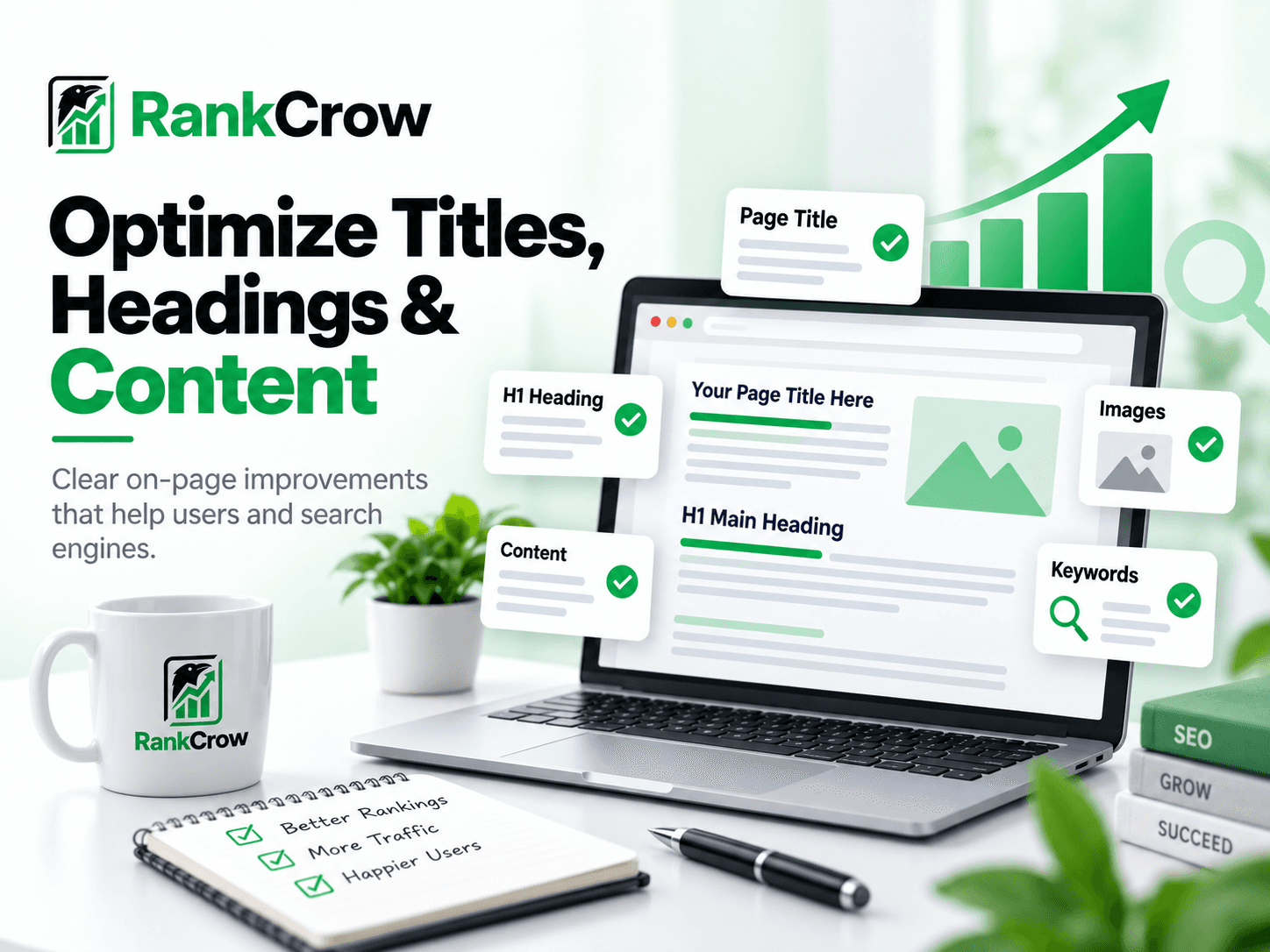
A page should have a clear main heading that tells readers what the content is about. Your supporting headings should then organize the page into logical sections.
Useful SEO H1 tags best practices include:
- use a clear main heading
- keep the H1 closely related to the page topic
- use H2s for major sections
- use H3s for subsections where appropriate
- keep the hierarchy logical
- avoid adding headings only to insert keywords
Example structure:
- H1: SEO Optimization Tips: Practical Ways to Improve Your Website
- H2: Improve Your Page Titles
- H2: Use a Clear H1 and Heading Structure
- H2: Improve Internal Linking
- H2: Check Technical SEO Basics
- H3: Check Indexability
- H3: Review Canonical Tags
You do not need a specific number of headings. The purpose of headings is to make content easier to scan, understand, and navigate.
For a deeper explanation of titles, headings, keyword placement, content, and other page-level signals, read RankCrow's What Is On-Page SEO? A Complete Guide.
4. Improve Existing Content
Publishing new content is useful, but improving pages you already have can be just as valuable.
Start by reviewing existing pages for:
- outdated information
- weak introductions
- missing explanations
- unclear wording
- duplicate sections
- broken links
- old screenshots
- unnecessary filler
- questions that are not fully answered
A useful page does not need to be unnecessarily long. A shorter article that solves the reader's problem clearly can be more useful than a long page filled with repetition.
Clarity
Explain ideas in simple language. Remove sentences that sound complicated without adding useful information.
Completeness
Look for obvious gaps. Ask whether a reader would still need to search somewhere else to understand the basic topic.
Accuracy
Update outdated information and remove claims you cannot support. This is especially important for technical SEO topics because search features, documentation, and best practices can change.
Usability
Use headings, examples, short paragraphs, and lists where they make the content easier to follow.
Improving existing content is one of the most practical SEO optimization tips because it lets you strengthen pages you already own instead of always starting from zero.
5. Use Keywords Naturally
Keywords help establish the subject of a page, but they should support the content rather than control it.
A primary keyword can often appear naturally in places such as:
- the SEO title
- H1
- introduction
- relevant headings
- main body content
- conclusion
- descriptive internal-link text where appropriate
But you do not need to force the exact same phrase into every section.
For example, this article can naturally discuss SEO optimization tips, SEO tips for beginners, search engine optimization tips, SEO best practices, improving website SEO, and improving organic visibility.
Avoid chasing a fixed keyword density if it makes the article repetitive. Google’s spam policies specifically warn against repeating phrases so often that the content sounds unnatural.
A better approach is to write naturally, then review whether the main topic is clear.
6. Improve Internal Linking
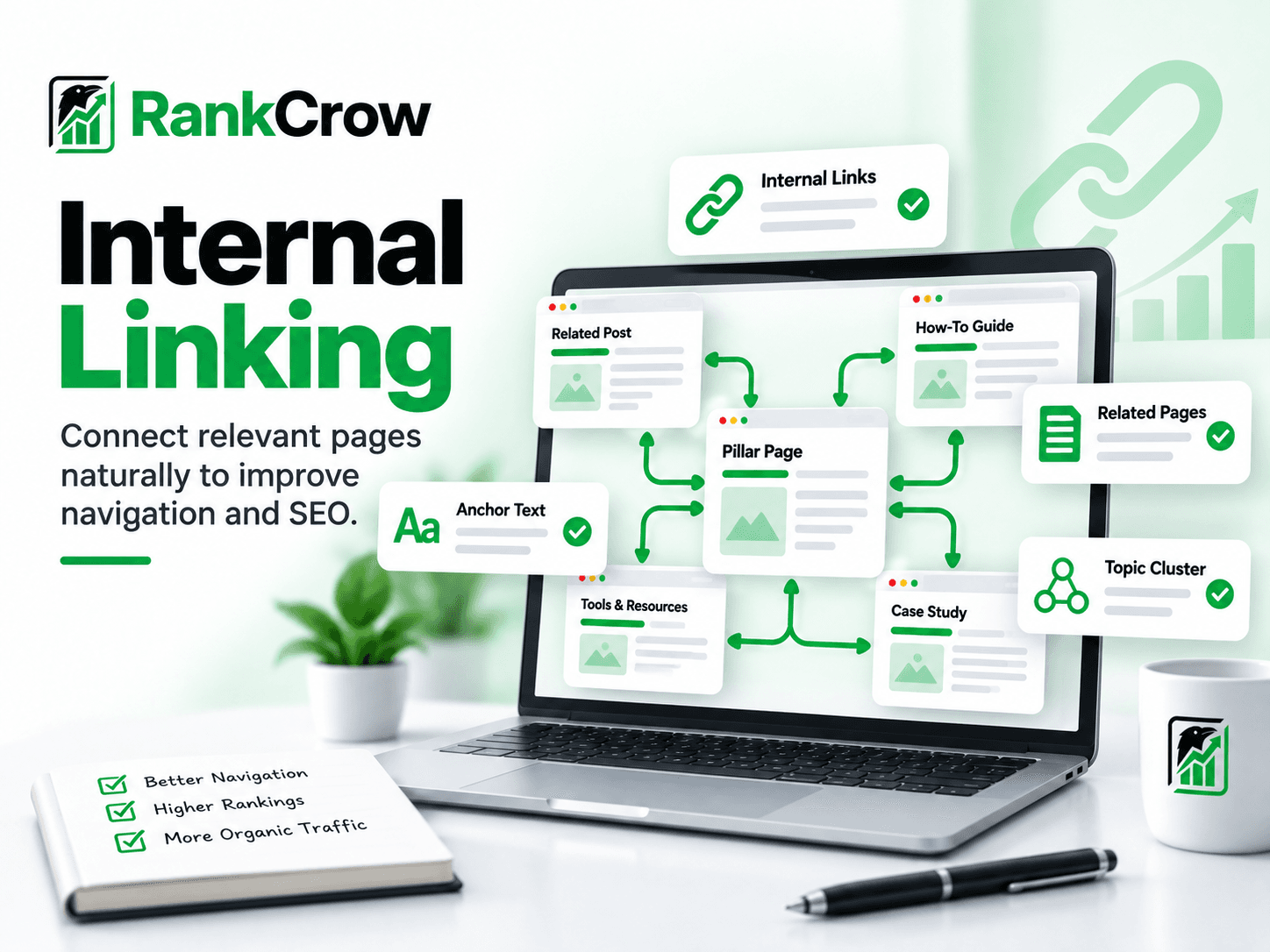
Internal links connect pages within your own website. They help visitors discover related information and make it easier to move between useful pages.
Internal links can also help search engines understand the relationships between different parts of your site.
When adding internal links:
- link to genuinely relevant pages
- use descriptive anchor text
- place links where readers are likely to need more detail
- avoid adding links just to increase link count
- review old content when publishing new pages
- make sure important pages are not isolated
For example, a section about page titles, headings, content, and keyword placement can naturally point readers to an On-Page SEO Guide.
A section about reviewing page issues can point readers to a Free SEO Analyzer.
Descriptive anchors are usually clearer than generic phrases such as “click here.” Internal linking should help the reader first.
7. Optimize Your Images
Images can make a page easier to understand, more engaging, and more useful. But poorly optimized images can create unnecessary page weight or accessibility problems.
Useful image optimization practices include:
- use images that support the content
- compress unnecessarily large files
- use suitable dimensions
- avoid uploading oversized images when smaller versions are enough
- use meaningful filenames where practical
- add useful alt text to meaningful images
- use empty alt text for purely decorative images
- avoid putting keywords into alt text unnecessarily
Poor alt text: seo seo optimization seo tips website seo
Better alt text: SEO audit dashboard showing page score and optimization checks
The second version is clearer and more useful.
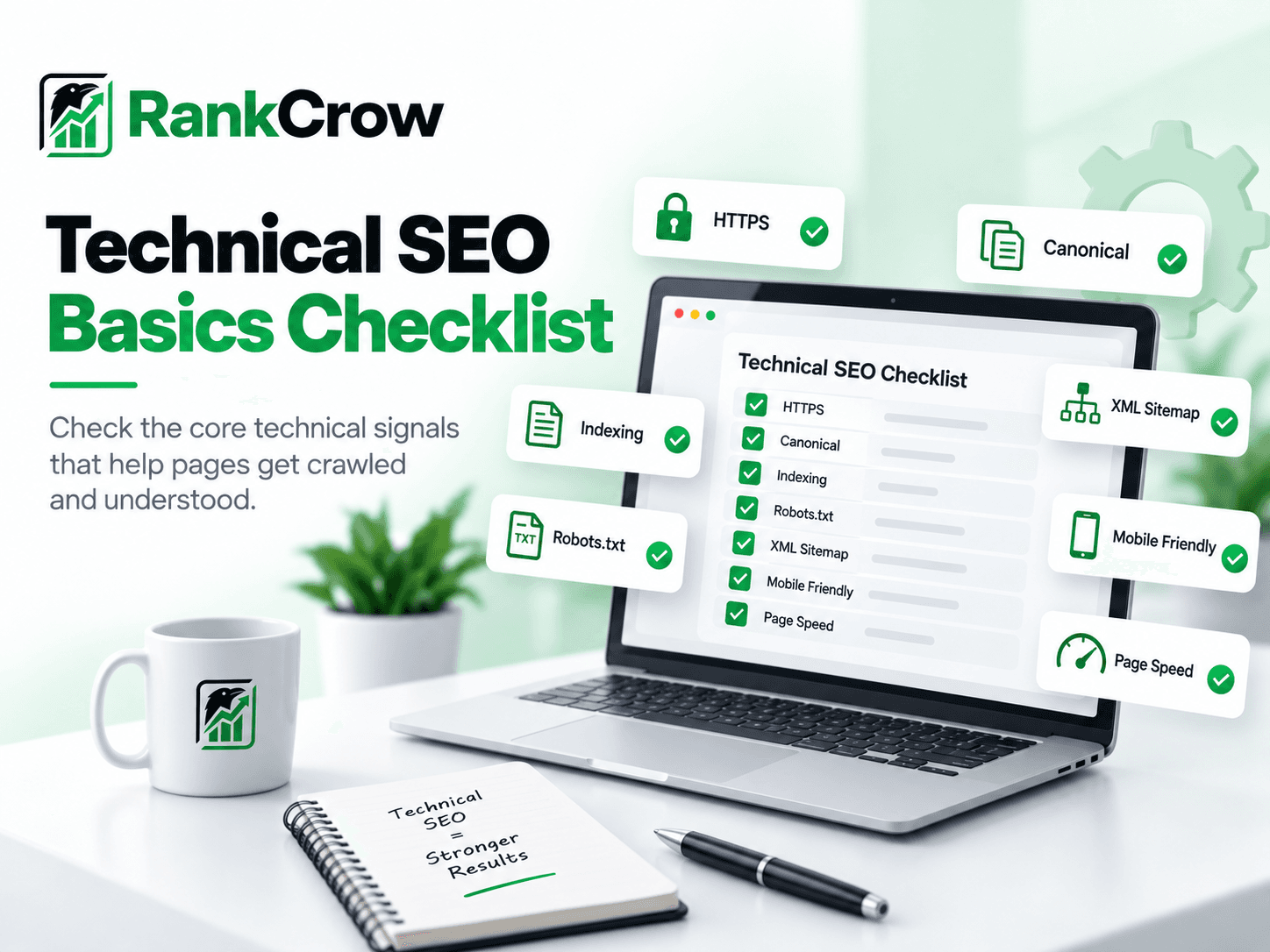
8. Check Technical SEO Basics
Strong content can still underperform if search engines have difficulty accessing, understanding, or indexing the page. You do not need to start with advanced technical SEO. Begin with the basics.
Check Indexability
Important public pages should not accidentally contain a noindex directive. A page that you want to appear in search should be accessible to crawlers and not unintentionally blocked from indexing.
Review Robots.txt
Your robots.txt file controls crawler access to parts of your site. However, blocking crawling and blocking indexing are not the same thing. Google explains that robots.txt is not the correct mechanism for reliably removing a page from Google Search. Google robots.txt guidance
That is why robots.txt should not be treated as the main method for removing a page from search.
Review Canonical Tags
Canonicalization helps search engines decide which URL should represent duplicate or very similar content. Google recommends using canonical signals consistently and notes that rel="canonical", redirects, and sitemap inclusion can all contribute to canonical selection. Google canonicalization guidance
Check that important pages are not accidentally pointing their canonical tag somewhere else.
Maintain a Sitemap
Your XML sitemap should contain the important canonical URLs you want search engines to discover. Google recommends including preferred canonical URLs in your sitemap and keeping it updated as your site changes. Google sitemap documentation
Use HTTPS
Public websites should use HTTPS so information between the visitor and the site is transferred securely.
Check Mobile Usability
Pages should remain readable and functional across mobile devices. Text should be easy to read, navigation should remain usable, and important content should not require awkward zooming or horizontal scrolling.
Learning how to improve your website SEO includes making sure good content can actually be crawled, indexed, and used.
9. Improve Page Performance and User Experience
SEO is not only about keywords and metadata. Your website also needs to work well for real visitors.
Common improvements include:
- reducing oversized images
- avoiding unnecessary scripts
- improving loading performance
- reducing unexpected layout movement
- keeping buttons and links easy to use
- making layouts comfortable on mobile
- avoiding intrusive elements that block important content
Google's Core Web Vitals measure important aspects of real-world user experience such as loading performance, responsiveness, and visual stability. Learn about Core Web Vitals on web.dev
Page performance should be part of a broader SEO review, but do not optimize metrics while ignoring the actual experience of the person using the site. The goal is a page that feels fast, stable, and easy to navigate.
10. Use Structured Data Where Appropriate
Structured data gives search engines machine-readable information about the content and entities on a page.
Examples can include:
- Article
- Product
- LocalBusiness
- Organization
- SoftwareApplication
Structured data should accurately describe the visible content on the page.
For article content, Google recommends following its structured-data guidelines, using applicable properties, validating markup, and keeping the page crawlable and indexable. Google Article structured data documentation
Structured data should not be treated as a shortcut to rankings. Use it when it accurately represents the content and helps search engines understand the page.
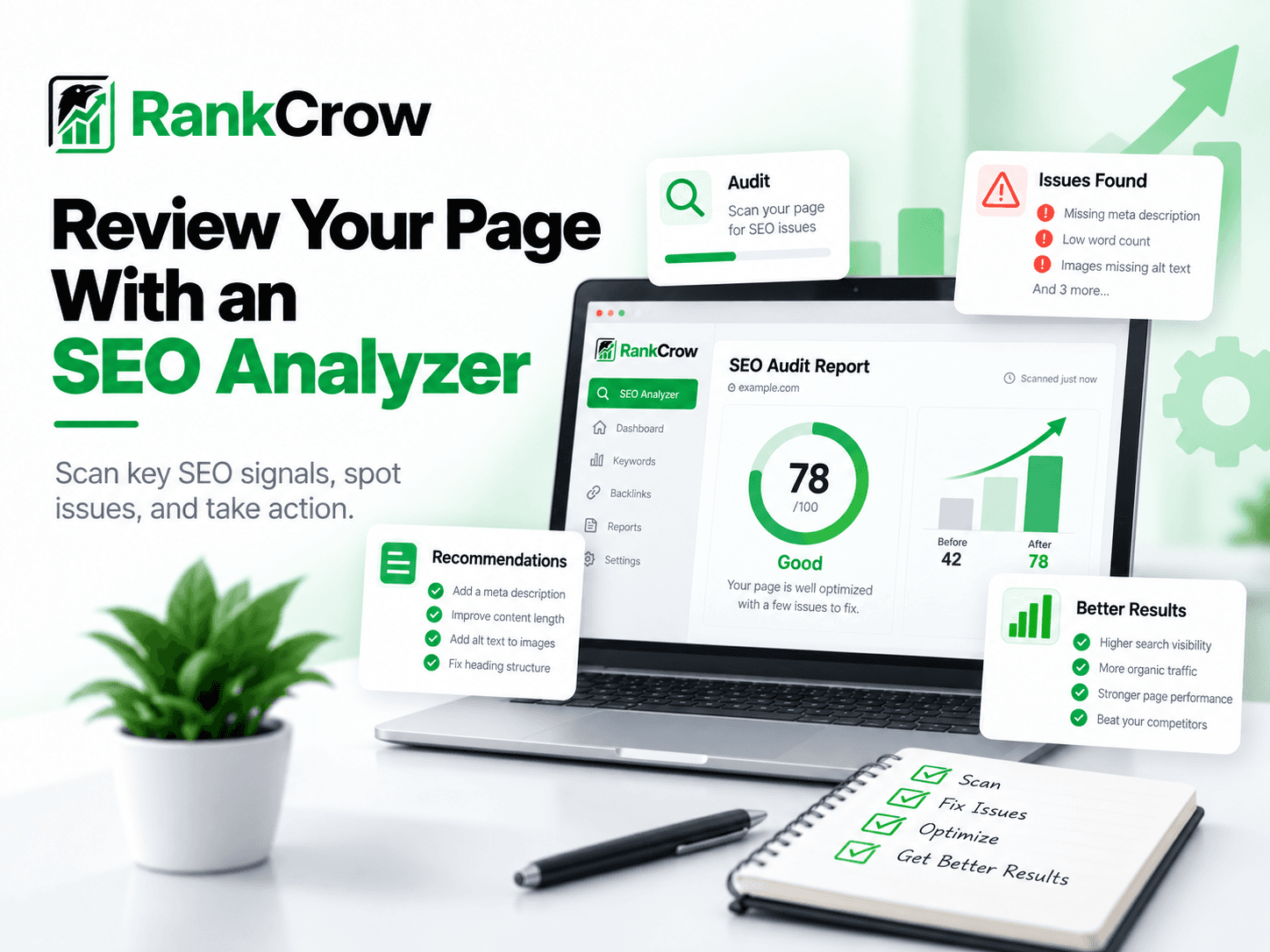
11. Review Your Page With an SEO Analyzer
SEO pages contain many individual signals, and small issues are easy to miss when reviewing everything manually.
An SEO analyzer can help bring several checks together. Depending on the page, useful checks can include:
- title
- meta description
- heading structure
- content signals
- internal links
- external links
- image alt text
- canonical configuration
- indexability
- robots directives
- structured data
- Open Graph metadata
- Twitter Card metadata
- other page-level SEO signals
RankCrow's Free SEO Analyzer can help you review these kinds of page-level issues in one place.
But the goal should not simply be to chase a score. Review the findings, understand which issues actually matter, fix the relevant problems, and then analyze the page again. That process is more useful than treating every warning as equally important.
SEO Tips for Beginners
If you are new to SEO, do not try to optimize the entire website in one day. Start with one important page.
A simple workflow is:
- Understand the page’s search intent.
- Review the SEO title and H1.
- Improve weak or outdated content.
- Add useful internal links.
- Optimize important images.
- Check indexability and canonical settings.
- Review the page on mobile.
- Look for obvious performance problems.
- Analyze the page for additional SEO issues.
- Fix meaningful problems and review the page again.
These SEO tips for beginners are intentionally simple. SEO becomes easier when you improve pages in a structured way instead of making random changes across the entire website.
Once the fundamentals are working, you can continue learning through RankCrow's SEO Guides as more practical guides are published.
SEO Best Practices to Follow in 2026
SEO changes over time, but many of the strongest SEO best practices in 2026 still depend on solid fundamentals.
Learning how to improve organic SEO often means fixing these fundamentals before chasing advanced tactics.
Focus on:
- satisfying search intent
- creating accurate and useful content
- keeping important information current
- using clear titles and headings
- maintaining logical site structure
- strengthening relevant internal links
- keeping important pages crawlable and indexable
- using structured data accurately
- improving page performance
- maintaining a strong mobile experience
- using Search Console to monitor indexing and search performance
Search features and tools will continue to evolve, but these fundamentals remain useful beyond a single year.
Avoid strategies designed mainly to manipulate rankings. Sustainable SEO usually comes from building pages that deserve to be useful, discoverable, and easy to understand.
Frequently Asked Questions
What are the best SEO optimization tips?
Start with search intent, clear page titles, useful headings, strong content, natural keyword usage, relevant internal links, image optimization, technical SEO basics, and good page usability. You do not need to fix everything at once. Start with the issues that have the clearest impact on the page.
How can I improve my website SEO?
Review your important pages individually. Check whether the content matches search intent, improve weak titles and headings, strengthen internal links, fix technical issues such as incorrect canonical or indexing settings, optimize images, and make sure the page works well on mobile. Then review performance over time instead of expecting immediate results.
How long does SEO optimization take?
Some on-page improvements can be completed quickly, but search engines still need time to crawl and process changes. Google notes that recrawling and reprocessing changes can take from a few days to a few weeks in some cases. Google guidance on recrawling
Ranking improvements can take longer because many factors affect search performance.
Can beginners improve SEO themselves?
Yes. Beginners can improve many areas themselves, including page titles, headings, content clarity, internal links, image alt text, keyword usage, basic indexability checks, and canonical review. More complex issues involving rendering, server configuration, migrations, or advanced technical problems may require development or specialist help.
How often should I update SEO content?
There is no universal schedule. Update content when information becomes outdated, important information is missing, search intent changes, examples are no longer useful, links stop working, or you can make the page more accurate or helpful. Do not change content simply to make the publication date appear fresh.
Final Thoughts
SEO does not need to begin with a complicated campaign.
Start with one important page and improve the areas that matter most: intent, titles, headings, content quality, internal links, technical accessibility, and user experience.
The most useful SEO optimization tips are the ones you can apply consistently without making your content sound artificial. Make practical improvements, monitor the results, and continue strengthening your website over time.
If you want a structured starting point, run your page through the RankCrow Free SEO Analyzer, review the issues it identifies, fix the problems that genuinely matter, and then analyze the page again.