
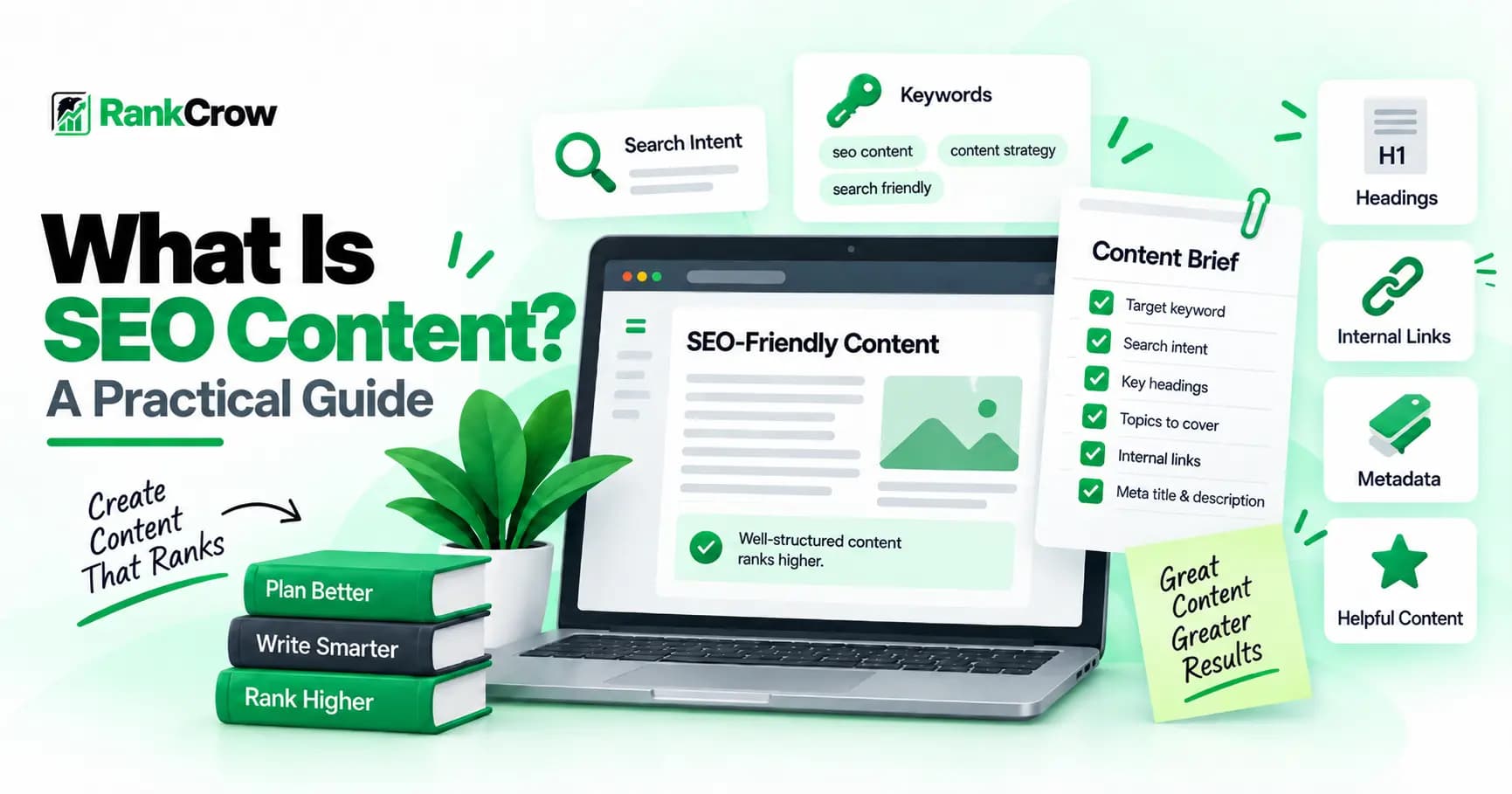
What Is SEO Content?
Creating content and creating SEO content are not exactly the same thing.
A page can be well written and informative but still be difficult for the right audience to discover through search. SEO content combines useful information with an understanding of what people search for, why they search for it, and what kind of page will best answer that need.
Good SEO content is not about repeating keywords until a page looks optimized. It starts with the reader. SEO then helps make the content easier to understand, organize, discover, and navigate.
Google describes its ranking systems as being designed to prioritize helpful, reliable information created to benefit people rather than content produced primarily to manipulate search rankings. See Google's people-first content guidance.
In this guide, you will learn what SEO content is, how an SEO content strategy works, how keywords fit into the process, what an SEO content brief should contain, and how to build useful, search-friendly content from research to publication.
What Counts as SEO Content?
SEO content is website content created to satisfy a real audience need while also being structured so search engines can understand its subject, context, and purpose.
SEO content can include:
- guides;
- blog posts;
- service pages;
- product pages;
- landing pages;
- tutorials;
- comparison pages;
- resource pages.
The format depends on the search intent.
For example, someone searching “what is SEO content” is most likely looking for an explanation and practical guidance. A useful guide fits that need better than a page that immediately tries to sell an unrelated service.
Strong SEO content usually combines a clearly defined topic, search intent alignment, useful and accurate information, logical headings, natural keyword usage, relevant internal links, descriptive titles and metadata, optimized images, readable formatting, and clear next steps for the reader.
This also helps explain the SEO writing meaning. SEO writing is not simply inserting phrases into paragraphs. It means creating useful content for readers while making the page topic and structure clear enough for search systems to understand.
For a broader look at page-level optimization, read RankCrow's What Is On-Page SEO? A Complete Guide.
Why SEO Content Matters
Search engines need enough context to understand what a page covers. Readers need enough useful information to solve the problem behind their search. SEO content helps connect those two needs.
A well-planned page can make its subject clearer through its title, headings, body copy, related terms, internal links, images, metadata, and overall structure.
At the same time, good organization makes the content easier for people to scan and understand.
That does not mean following an SEO checklist guarantees a high ranking. Search visibility depends on many systems and signals. There is no content formula that guarantees a particular Google position.
What thoughtful optimization can do is give a page a stronger foundation: clearer relevance, better organization, improved usability, stronger internal connections, and information that more closely matches search intent.
Google recommends descriptive and concise title text and warns against keyword stuffing titles. See Google's title link best practices.
SEO Content vs Regular Content
Regular content and SEO content can both be useful. The main difference is the planning behind them.
The difference is not that SEO content must sound more technical. Strong SEO content should usually sound natural. Research should guide the page, not make the writing robotic.
What Is an SEO Content Strategy?
An SEO content strategy is a structured plan for deciding what content to create, who it is for, what search need it should satisfy, which keywords belong on which page, how related pages connect, what should be published first, and which existing content should be updated.
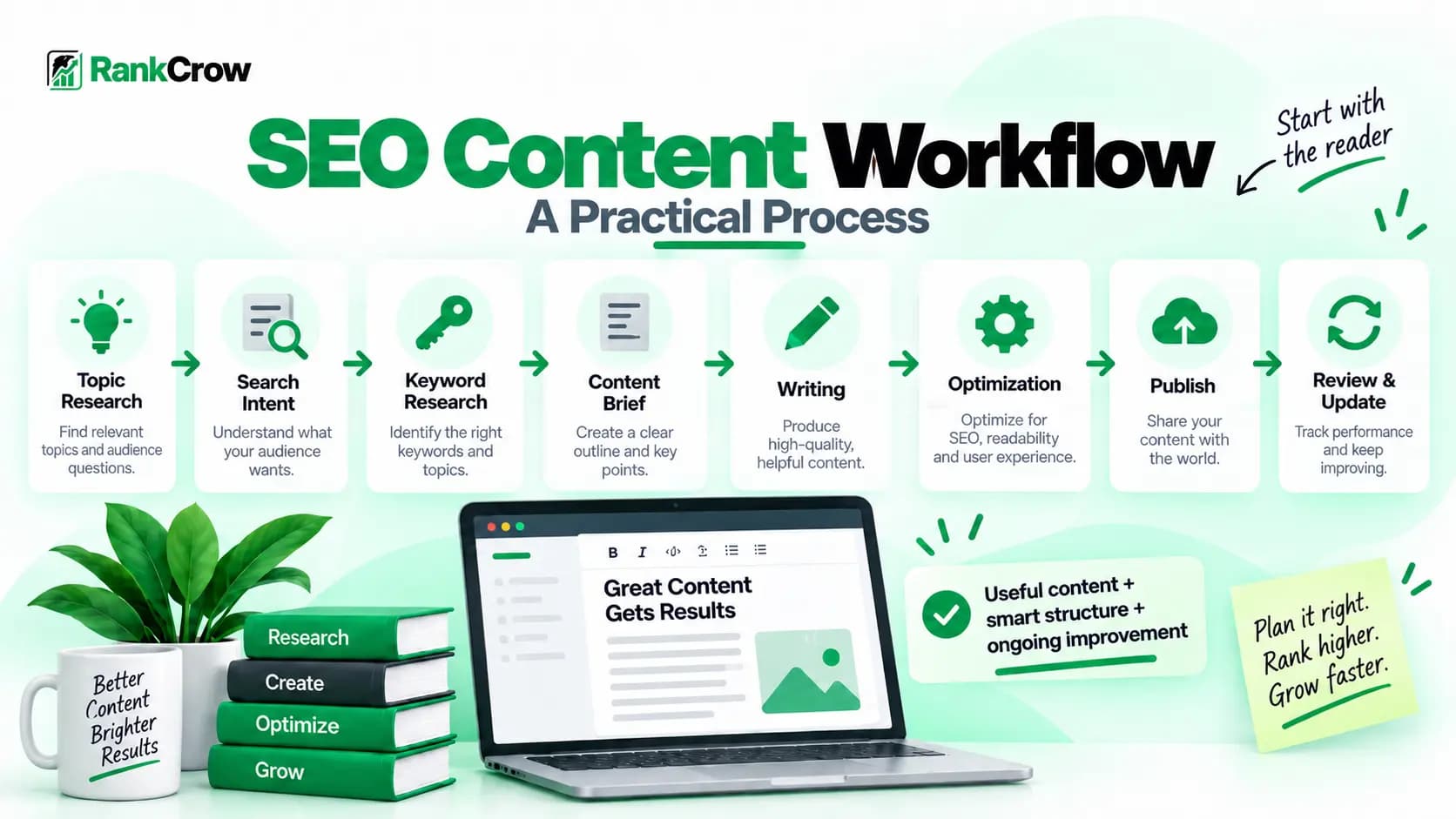
A strong content strategy and SEO process starts before writing.
Getting content strategy SEO right early saves rework later, because keyword mapping is much harder to fix after publishing.
Understand Your Audience
Identify the problems, questions, and goals your target audience actually has. A local business owner, content writer, marketer, and SEO professional may search differently even when they are interested in a similar topic.
Research Topics and Search Intent
Keyword research can reveal how people describe their needs, but volume alone should not decide your content plan. A keyword is valuable when it is relevant to your audience and the page you can realistically create for that intent.
Map Keywords to Pages
One of the most important parts of an SEO content strategy is deciding which topic belongs to which page.
Topics such as SEO content, on-page SEO, technical SEO, internal linking, and image SEO may deserve different pages. Trying to target all of them heavily on one page can weaken topical focus.
Keyword mapping can also reduce unnecessary cannibalization by preventing multiple pages from being created for nearly identical search intent.
Build Topic Relationships
Related content can support each other. An SEO content guide can link naturally to an On-Page SEO guide, a Technical SEO guide, and later to dedicated Internal Linking or Image SEO resources when those pages exist.
Plan Updates
A content strategy does not end when an article is published. Pages may need updates when facts change, products or features change, search intent shifts, internal resources become available, examples become outdated, or important questions are missing.
A good SEO and content strategy therefore combines research, publishing, linking, measurement, and maintenance.
How to Create SEO Content Step by Step
A practical SEO content creation process should make every major decision intentional.
1. Choose a Useful Topic
Start with something relevant to your audience and your website's purpose. Do not create a page simply because a keyword has search volume.
2. Understand Search Intent
Look at what the person behind the search appears to want: learning something, solving a problem, comparing options, finding a brand, choosing a product or service, or completing an action.
3. Research Primary and Related Keywords
Select one clear primary topic, then identify related secondary and supporting keywords that help explain the subject more completely.
4. Review the SERP
Search results can help show what Google currently interprets as useful for a query. Look at page formats, common questions, recurring subtopics, depth of coverage, and user expectations.
Use the SERP to understand intent, not to copy competing pages.
5. Create the Outline
Build a logical sequence. Each section should have a purpose.
6. Prepare an SEO Content Brief
A good brief keeps research and writing aligned by defining keywords, intent, audience, structure, sources, links, images, and important limitations before drafting begins.
7. Write for People First
Explain the topic clearly, use examples where they help, and remove anything that exists only to inflate word count.
Google explicitly says it does not have a preferred word count creators need to meet for ranking purposes. See Google's people-first content guidance.
8. Optimize the Page Structure
Review the SEO title, H1, H2 and H3 hierarchy, introduction, URL, metadata, internal links, images, and readability.
9. Add Contextual Internal Links
Internal links should help readers discover related information. Google recommends descriptive anchor text and contextual internal linking so users and Google can better understand connected pages.
See Google's link best practices.
10. Optimize Images
Use descriptive filenames, appropriate dimensions, compressed WebP files, meaningful alt text when the image communicates information, and explicit width and height.
11. Review Readability and Accuracy
Remove repetition, shorten overly long sentences, verify facts, check sources and links, review headings, and read the article as a normal visitor.
12. Publish, Monitor, and Update
An SEO driven content process does not end at publication. Review how the page performs and improve it when there is a genuine reason to do so.
What Is an SEO Content Brief?
An SEO content brief is a set of practical instructions prepared before writing. It gives the writer enough direction to cover the topic thoroughly without scripting every sentence.
A useful brief can contain the topic, primary keyword, secondary keywords, supporting keywords, search intent, target audience, recommended title, H1, URL, outline, internal links, authoritative sources, image requirements, CTA, and important claims or restrictions.
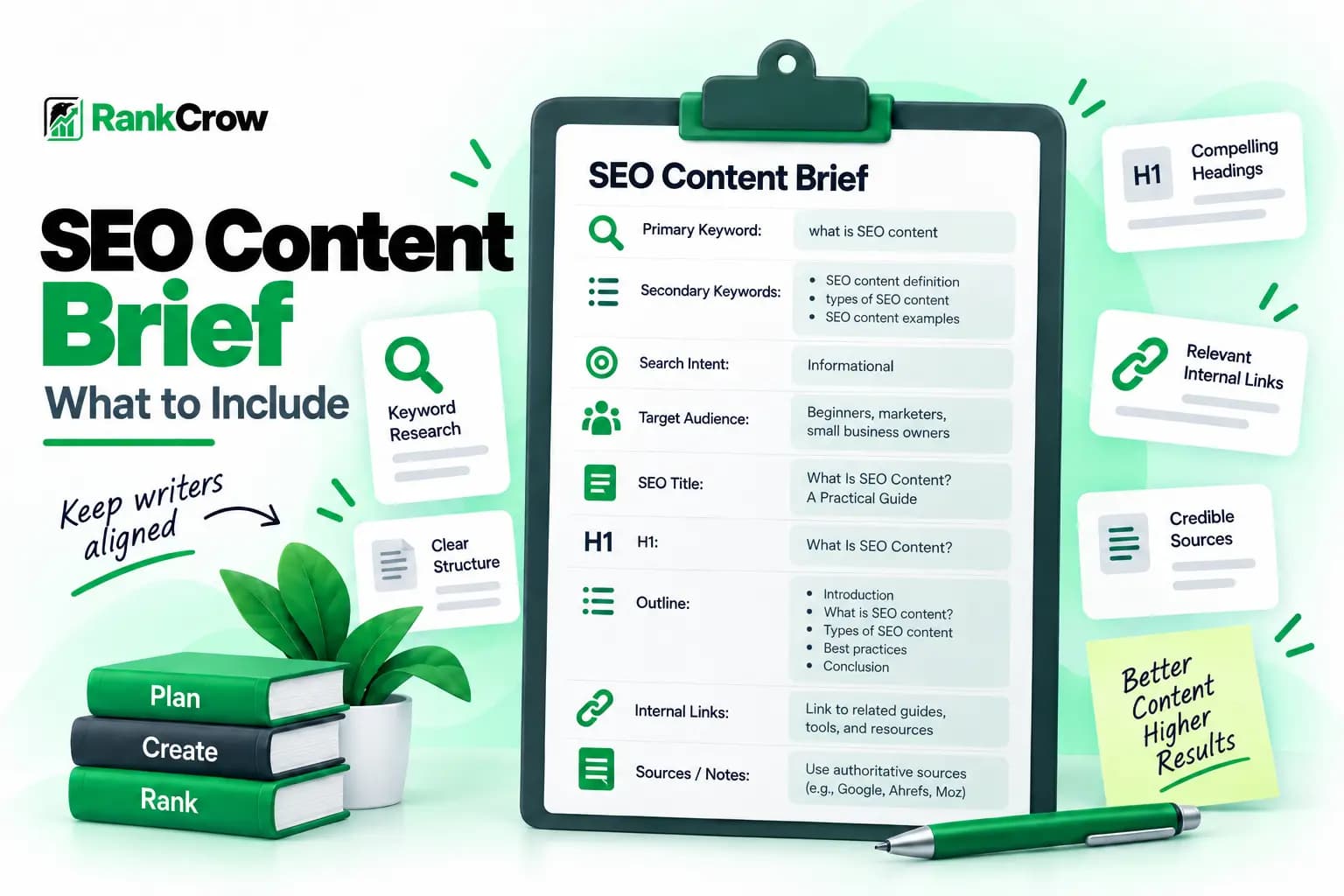
Simple SEO Content Brief Example
- Topic: Content SEO
- Primary keyword: what is SEO content
- Intent: Informational
- Audience: Website owners, bloggers, marketers, writers, and SEO beginners
- H1: What Is SEO Content? A Practical Guide
- Main sections: Definition, Strategy, Creation Process, Briefs, Keywords, SEO-Friendly Content, Mistakes, and Checklist
- Internal links: On-Page SEO Guide, Technical SEO Guide, SEO Guides, and Free SEO Analyzer
- Primary goal: Teach readers how useful content and SEO planning work together
The brief does not tell a writer to repeat the main keyword a certain number of times. Its job is to keep the article focused.
How to Use Keywords in Content
When researching keywords for content writing, it is easy to focus too heavily on keyword counts. That can lead to worse writing.
A better approach is to use keyword research to understand the main topic, related questions, terminology people use, different aspects of the topic, and possible search intent.
Where Can a Primary Keyword Appear?
When natural, the primary keyword may fit in the SEO title, H1, introduction, a relevant heading, body copy, and metadata.
It does not have to appear everywhere.
What About Secondary Keywords?
Secondary keywords can help build topical depth. For this guide, phrases such as SEO content strategy, SEO content creation, SEO content brief, and SEO friendly content represent genuine subtopics.
That is more useful than repeating the primary keyword in every section.
Avoid Forced Exact Matches
If an exact search phrase sounds awkward, rewrite it naturally. SEO should not make English worse.
Avoid Keyword Stuffing
Repeating a phrase simply to increase density can make content difficult to read.
Google's spam policies define keyword stuffing as unnatural repetition used in an attempt to manipulate search rankings, so keyword use should remain relevant and natural.
What Makes Content SEO-Friendly?
SEO friendly content starts with usefulness. Optimization cannot compensate for a page that fails to answer the reader's question.
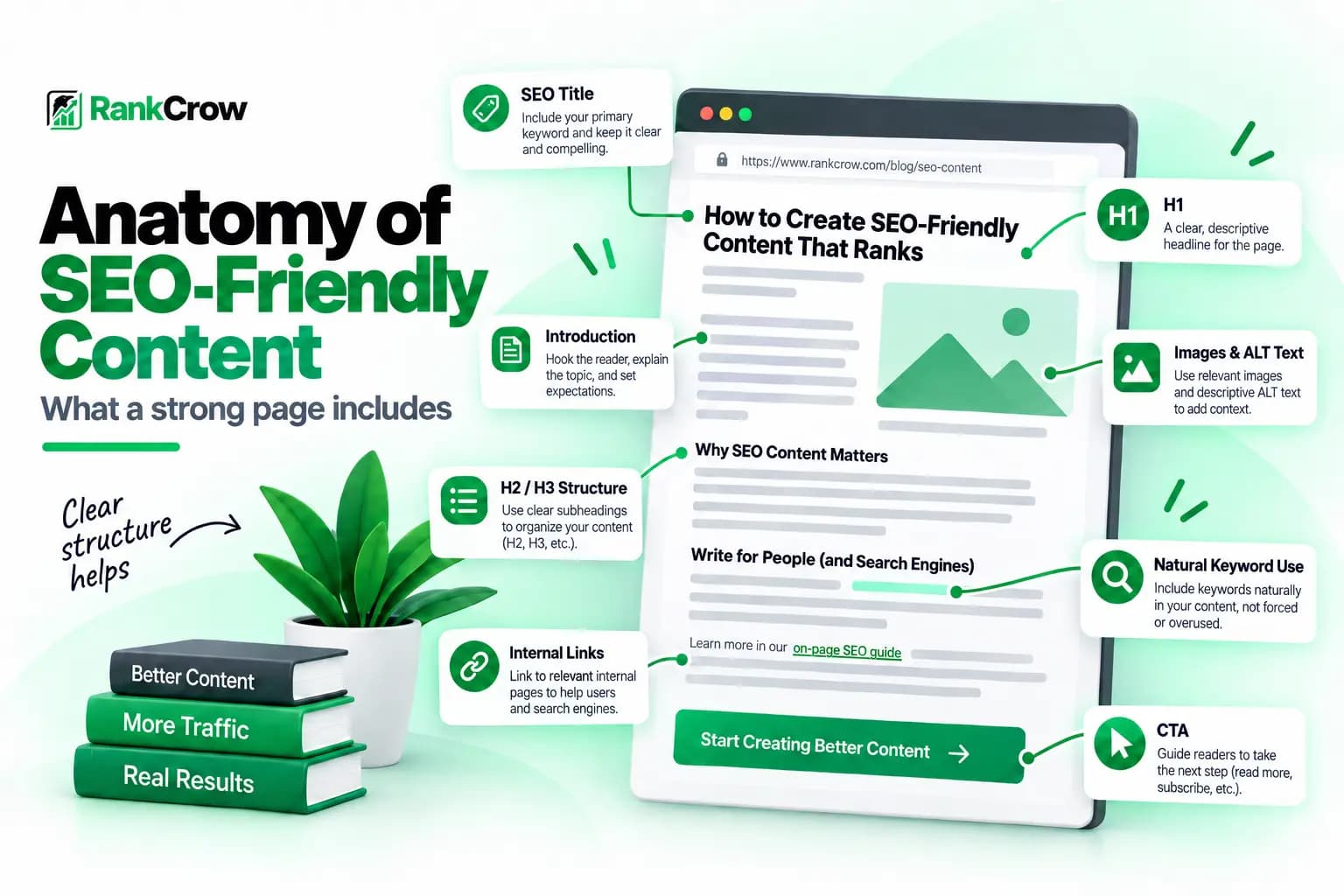
Search Intent Alignment
The page should provide the type of information the visitor expects.
Clear Structure
Headings should organize long material into logical sections, not exist merely because keywords fit inside them.
Descriptive Titles
A title should give users an accurate preview of the page.
Useful Internal Links
Links help readers continue their journey and help search engines understand relationships between pages.
Readable Paragraphs
Tables, lists, examples, and visual elements can improve comprehension when they are used for a clear purpose.
Useful Images
An image should explain, demonstrate, compare, or summarize something rather than simply fill space.
Original Value
Being original does not mean discovering a topic nobody has ever discussed. It means your page should contribute meaningful value rather than simply rewording existing search results.
Google's content self-assessment asks whether a page provides original information, reporting, research or analysis, comprehensive coverage, insightful information, and substantial value compared with other available pages.
That value may come from clearer explanations, original examples, useful processes, first-hand experience, analysis, organization, practical checklists, or better context.
Common SEO Content Mistakes
Writing for Keywords Instead of People
This often creates awkward sentences and repetitive headings.
Ignoring Search Intent
A page can target the correct phrase while answering the wrong question.
Keyword Stuffing
Unnatural repetition can make content worse for readers and may violate Google's spam policies when used to manipulate rankings.
Creating Thin Content
Thin content is not simply content with a low word count. The real problem is failing to satisfy the user's need.
Adding Filler to Make an Article Longer
Google explicitly states that it does not have a preferred word count creators should aim for. Write enough to explain the topic properly, then stop.
Targeting Too Many Topics on One Page
A focused article usually performs its job better than a page trying to target several unrelated intents.
Weak Internal Linking
Publishing useful pages without connecting them can make navigation harder and leave relevant resources isolated.
Poor Heading Structure
Headings should communicate the organization of the page, not function as keyword containers.
Outdated Information
Content should be updated when meaningful facts or advice change.
How RankCrow Helps With SEO Content
RankCrow can help review important page-level signals while you are preparing or improving content.
The RankCrow Free SEO Analyzer can currently help examine areas such as title and meta information, word count, readability, estimated reading time, main or top keyword, keyword presence and density, H1-H6 structure, heading hierarchy, internal and external links, image alt usage, other supported SEO checks, and overall SEO Score.
The analyzer should be used as a review tool, not as a substitute for editorial judgment.
For example, a tool may identify a keyword-density signal, but that does not mean you should automatically repeat a keyword until a particular percentage is reached.
The final question should always be: Does this change make the page clearer or more useful?
For page-level fundamentals like titles, headings, and technical basics, see RankCrow's SEO Optimization Tips guide.
For technical website issues that can affect crawling and indexing, see RankCrow's Technical SEO Issues: Common Problems and How to Fix Them.
Review Your Content With RankCrow
Analyze supported content, headings, keywords, links, images, metadata, and technical page-level signals in one place.
SEO Content Checklist
Use this checklist before publishing important content or when reviewing an existing page.
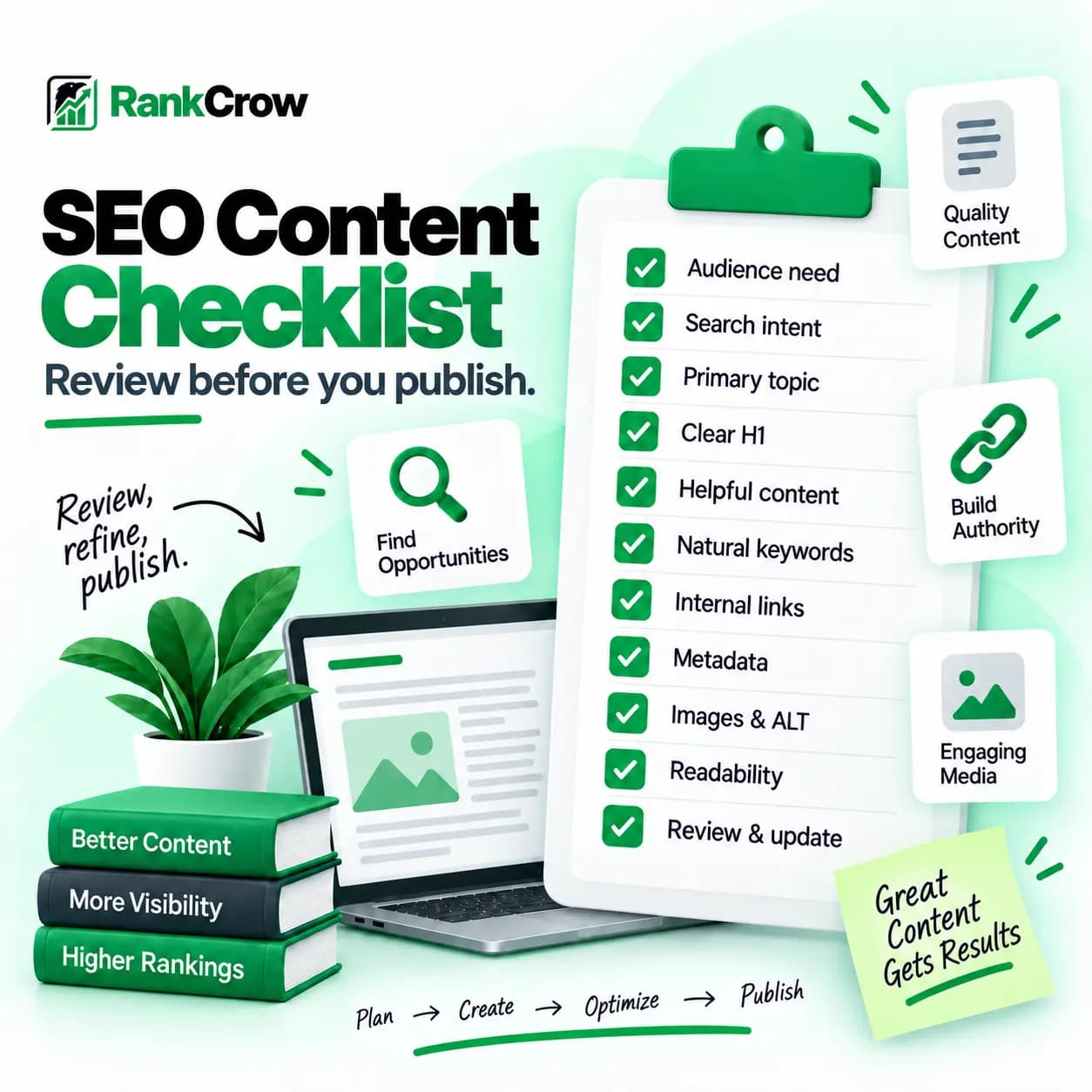
SEO Content Checklist
Use the checklist as a review tool rather than a rigid formula. Context matters, and a change is only useful when it improves the page for readers or helps accurately communicate its purpose.
Frequently Asked Questions
What is SEO content?
SEO content is useful website content created around audience needs and search intent, then organized and optimized so its topic and purpose are clear to both readers and search engines.
What is SEO content strategy?
An SEO content strategy is a plan for choosing topics, researching search demand and intent, mapping keywords to pages, creating useful content, connecting related pages, and maintaining that content over time.
What is an SEO content brief?
An SEO content brief is a set of instructions prepared before writing. It can include the primary topic, keywords, search intent, target audience, title, headings, internal links, sources, images, and other writing requirements.
How do you create SEO-friendly content?
Start with a useful topic, understand search intent, research the subject, create a logical outline, write for readers, use keywords naturally, optimize page structure, add relevant internal links, and review the finished content for clarity and accuracy.
How many keywords should you use in one article?
There is no universal number. Choose one clear primary topic and use related terms where they genuinely help cover that topic. Do not add keywords merely to reach a predefined count or density.
What is the difference between SEO content and content marketing?
SEO content focuses specifically on satisfying search demand and improving organic discoverability. Content marketing is broader and can include email, social media, video, newsletters, brand content, lead nurturing, and other channels.
Can good content rank without SEO?
Useful content may gain search visibility even if it was not built through a formal SEO process. However, good SEO practices can make content easier to discover, understand, navigate, and connect with the rest of a website. Optimization still does not guarantee rankings.
Final Thoughts
Understanding what SEO content is becomes much easier when SEO is treated as part of a useful publishing process rather than a layer of keywords added after writing.
Strong SEO content starts with people.
You identify what your audience needs, understand the intent behind their searches, organize the subject clearly, provide genuinely useful information, and then use SEO techniques to improve structure and discoverability.
A strong SEO content strategy brings research, writing, page optimization, internal linking, and updates together rather than treating them as separate activities.
After publishing, continue improving the page when there is a genuine opportunity to make the information clearer, more accurate, or more useful.
Readers can also browse RankCrow's SEO Guides library for related resources or use the RankCrow Free SEO Analyzer to review important page-level SEO signals.
Ready to Review Your Content?
Use RankCrow to check supported page-level SEO signals and identify areas that may deserve attention.
Key Takeaways
- Start with a real audience need and clear search intent.
- Choose one main topic instead of forcing unrelated keywords onto one page.
- Organize information with a logical heading structure.
- Use primary, secondary, and supporting keywords naturally.
- Connect related pages with useful internal links.
- Create descriptive titles and metadata.
- Review readability, accuracy, images, and page-level SEO before publishing.
- Update content when information or user needs change.